The August Press Journal
Stories, guidance, and inspiration for preserving wedding flowers, learning the art of flower pressing, and creating lasting botanical artwork with locally grown flowers.
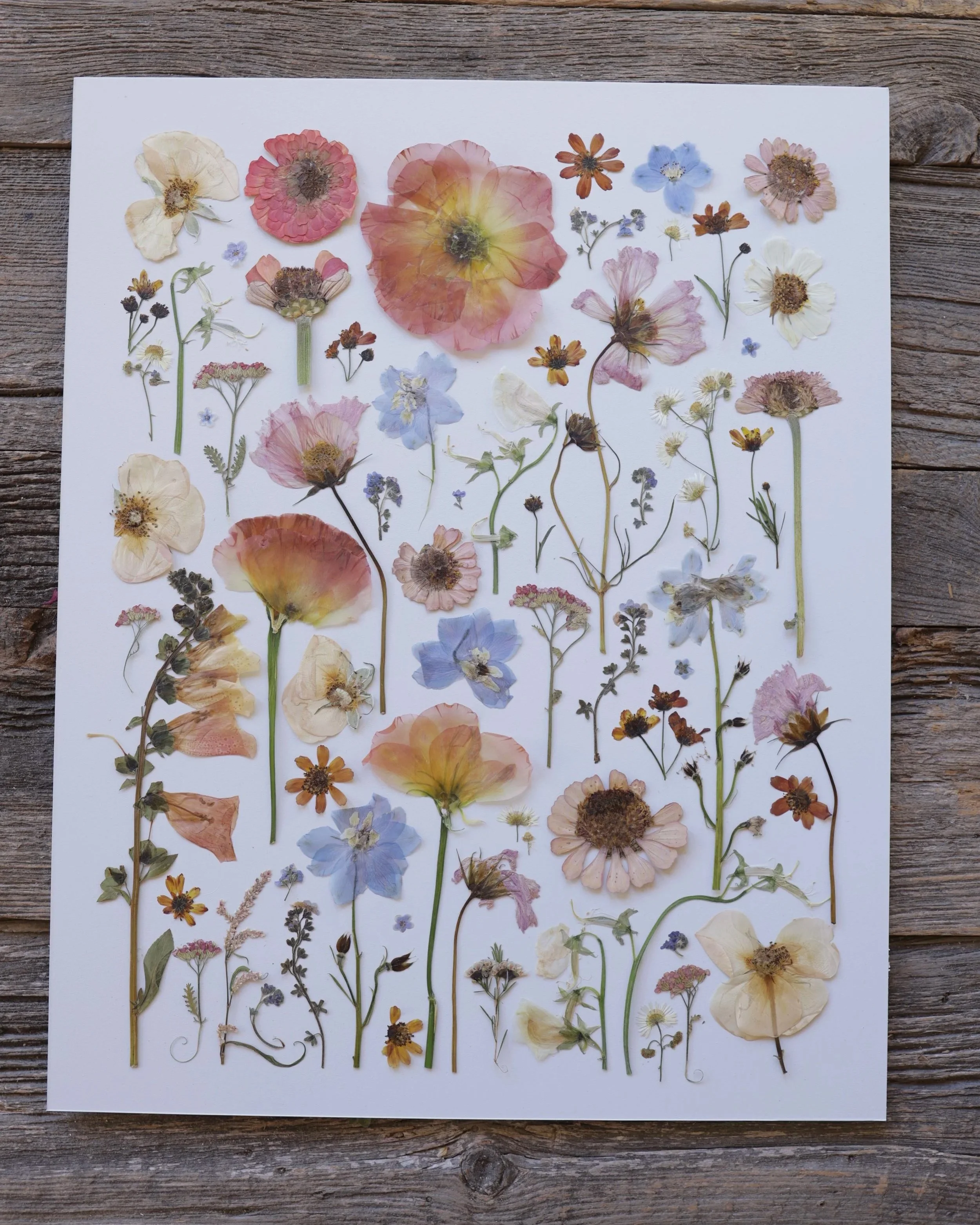
What Wedding Flower Trends Work Best for Pressing?
What Wedding Flower Trends Work Best for Pressing?
Wedding flower trends are becoming more personal, seasonal, and expressive. From loose garden-style bouquets to rich jewel tones and locally grown blooms, couples are embracing flowers with individuality and character. Many of these trends also lend themselves beautifully to pressed floral artwork.
After five years of pressing flowers, following a background in sustainable floristry and locally grown, niche flowers, I have developed a particular appreciation for the varieties and bouquet styles that translate well into two-dimensional art. I began pressing bridal bouquets a couple of years ago and have since specialized in wedding bouquet preservation, creating professional flower presses for the DIY presser, creating large scale fine art commissions and one-of-a-kind floral prints and posters.
Through this work, I have learned that the best flowers for pressing are not necessarily the most expensive or dramatic. Shape, texture, colour, freshness, and the way flowers work together all influence the finished artwork.
Most importantly, preserving a wedding bouquet is about more than preserving flowers. It is about capturing the essence of a deeply personal moment.
Garden-Style Bouquets Are Ideal for Pressing
One of my favourite wedding flower trends for pressing is the loose, airy, garden-style bouquet.
These bouquets combine flowers of different sizes, varied stem lengths, delicate filler flowers, and interesting textures. Rather than forming one dense, uniform shape, the flowers have room to breathe and contribute individually to the overall composition.
When flowers are pressed, their shapes and silhouettes become especially important. A varied bouquet gives me more opportunities to create interesting, balanced artwork.
Look for Variety in Shape and Texture
The bouquet styles that excite me most include:
Different flower sizes and shapes that create visual movement.
Longer and shorter stems that add variety to the composition.
Delicate filler flowers that introduce intricate details.
Interesting greenery that provides structure and contrast.
A mixture of colours and textures that gives the artwork character.
I particularly enjoy working with garden-style bouquets because their organic quality translates naturally into pressed art.
By contrast, very tight, predominantly white bouquets or arrangements built around a single colour and similar flower shapes can be more challenging to turn into visually varied compositions. They can still be beautiful choices for a wedding, but they may offer fewer opportunities for contrast.
Delicate Flowers and Dried-Looking Textures Make Beautiful Art
Some of my favourite flowers to press in my professional presses are the smaller, more delicate varieties that bring detail to a composition.
Chamomile, baby's breath, and Forget-me-nots and Tweedia are wonderful examples. They create little points of interest between larger blooms and help fill spaces in the frame without overwhelming the arrangement.
I especially love blue delphinium. When a florist uses different varieties with varying shades of blue, the result can be beautiful pressed artwork. Pairing these blues with soft pink roses or Lisianthus creates a romantic contrast that feels both delicate and expressive.
Why Filler Flowers Matter
Filler flowers can sometimes seem secondary when couples are choosing their bouquets, but they play an important role in pressed floral art. Their smaller scale adds detail, visual rhythm, and balance.
If you know you want your wedding flowers pressed, consider a bouquet that combines statement blooms with smaller flowers and varied textures. This gives your preservation artist more elements to work with when creating the final composition.
Locally Grown Flowers Bring Individuality
My background in sustainable floristry has shaped the way I approach wedding bouquet preservation. I love seeing floristry move toward seasonal, locally grown, and more individual designs.
Couples can embrace a popular colour palette while choosing flowers that feel distinctive to them. Locally grown flowers often offer wonderful variety in shape, colour, and texture, helping create artwork that feels truly one of a kind.
In my experience, flowers grown without synthetic pesticides or herbicides often press particularly well, although growing methods alone cannot guarantee a successful result.
Seasonal Flowers Tell a Story
Seasonality is another reason I love pressed wedding flowers. A bouquet of soft pink tulips can capture the feeling of spring, while a summer arrangement with a deep yellow sunflower, pink accents, and rich red roses tells a completely different story.
These seasonal palettes remain part of the finished artwork. The flowers may change during pressing, but their combination can still evoke the atmosphere of the time of year when the wedding took place.
Jewel Tones and Varied Colours Work Beautifully
I have noticed more bouquets featuring jewel tones, different flower shapes, and a mixture of textures. These trends offer exciting possibilities because they create contrast and visual interest.
A bouquet might combine rich colours with delicate flowers, rounded blooms with elongated petals, and soft textures with more structured forms. This variety allows each flower to contribute something to the finished artwork.
Which Flower Colours Retain Best?
Colour changes are a natural part of pressing flowers, so it is important to have realistic expectations.
In my experience, yellow, orange, blue, and often pink tend to retain their colour particularly well. Red flowers can sometimes shift toward brown, while white flowers may also become brownish.
Results vary depending on the individual flower and its condition. No colour is guaranteed to remain exactly as it appeared on the wedding day.
Understanding these changes helps couples approach preservation as an artistic process rather than expecting an exact reproduction of their fresh bouquet.
Which Wedding Flowers Are Hardest to Press?
Some flowers are more challenging because of their thickness, structure, or condition.
Dahlias, for example, have many layers of petals and a substantial shape that can make them difficult to press. Other thick, fleshy flowers can also require more specialized handling.
Peonies and similarly lush flowers can press beautifully when they are still fresh, but their condition matters. Flowers that have become limp or started to deteriorate may be harder to work with.
Tulips can be challenging, too, but they are not impossible to press. With the right approach, they can capture the distinctive feeling of spring.
Sunflowers are another difficult variety because of their substantial structure. However, I have developed a technique that allows me to make sunflowers shine in pressed artwork. I love being able to work with flowers that might otherwise be considered unsuitable for pressing.
The important thing to remember is that a challenging flower is not necessarily an impossible one. An experienced preservation artist may have techniques that open up possibilities for your bouquet.
Should You Choose Your Wedding Flowers Based on Pressing?
My advice is to choose the flowers you love for your wedding first.
Your bouquet complements your dress, reflects your personal style, and may include flowers chosen for sentimental reasons. Perhaps a particular flower reminds you of someone you love, or a certain colour palette captures the feeling you want for your day.
Those things matter more than choosing a bouquet simply because it will be easy to press.
Balance Your Wedding Vision With Your Preservation Goals
If you love a tight, monochromatic bouquet, choose it because it suits your wedding. Even if it offers fewer opportunities for a varied pressed composition, there may be other ways to create meaningful artwork.
A smaller piece might suit a simple bouquet beautifully. Depending on the flowers available, suitable blooms from the reception could also be incorporated to add variety.
The goal is not to compromise the bouquet you want to carry. It is to find a way to honour your flowers while creating artwork that works beautifully in its own right.
Talk to Your Florist and Preservation Artist Early
I am seeing more couples consider flower preservation before their wedding rather than waiting until the celebration is over and wondering what to do with their flowers.
I think this is a positive change. Ideally, the florist and preservation artist can discuss the couple's vision together. The florist understands the fresh bouquet, while the preservation artist understands how the flowers may translate into pressed artwork.
If preservation matters to you, tell your florist early and discuss your preferred flowers, colours, textures, and any varieties that hold special meaning.
It is also worth speaking with your preservation artist before the wedding. They can explain what to expect and help you understand how your choices may translate into the finished piece.
Understand the Pressing and Framing Process
Pressed flower preservation is an artistic process, not simply a way to make a bouquet look exactly as it did on the wedding day.
When I preserve wedding flowers, I am not trying to recreate the original bouquet perfectly. I am trying to press the essence of the flowers and transform them into something new that carries the feeling of that moment forward.
Your Final Artwork May Look Different
Because flowers can change colour and shape during pressing, I often recommend waiting to see how they emerge from the press before making final decisions about the presentation.
Background colour, glass-on-glass framing, and the size of the finished piece all influence how the artwork looks.
It can be tempting to find a beautiful pressed bouquet on social media and want the exact same design. However, every bouquet is different. A frame size or composition that works for one collection of flowers may not suit another.
Look for a preservation artist whose existing work reflects the style you love, but allow your own flowers to guide the final design.
Choose a Preservation Artist You Trust
Wedding bouquet preservation is deeply personal. The bride has carried those flowers down the aisle, and they may represent months of planning, meaningful relationships, and memories she wants to keep close.
The florist has carefully prepared the bouquet, and then it is entrusted to me to create something new from it. I take that responsibility seriously.
When choosing a preservation artist, look at their experience, artistic style, and approach to customer service. Review examples of their work and make sure you connect with the way they arrange flowers, use colour, and present their finished pieces.
You should feel comfortable asking questions and discussing your expectations. Each bouquet is different, and each bride deserves individual attention throughout the process.
The Best Wedding Flower Trend Is One That Feels Like You
Garden-style bouquets, delicate filler flowers, locally grown blooms, and varied jewel tones all offer wonderful possibilities for pressed floral artwork. Some of my favourites include chamomile, baby's breath, tweedia, and blue delphinium paired with soft pink roses or lisianthus.
But there is no single perfect bouquet for pressing.
Choose flowers that feel right for your wedding, and plan ahead if you want to preserve them. A conversation with your florist and preservation artist can help you understand the possibilities without compromising your vision.
Ultimately, I want to capture the essence of the flowers and what they represented on the wedding day. The finished artwork may not look exactly like the original bouquet, but it can carry its spirit, its seasonal character, and its emotional significance into the future.
That is what makes pressed wedding flowers so special: they become something new while preserving a connection to a moment that can never be repeated.